A-LEVEL ENGLISH LITERATURE
A Level – English Literature
Introduction
In Loreto we deliver the CCEA English Literature specification.
This course provides an opportunity to study a wide range of Irish and International literature. Students are given the opportunity to explore an important part of their own cultural heritage and to deepen their understanding, not only of their own history and society but also gain an insight into others. Through independent and critical reading, discussing ideas and engaging in debate with peers, students will develop their interest and enjoyment in literary studies and become accomplished, discerning readers.
AS/A2 pupils have 4 double periods of English Literature per week.
The latest version of the revised AS and A2 specifications can be viewed and downloaded on the CCEA website athttp://www.rewardinglearning.org.uk/microsites/english_literature/revised_gce/index.asp
Recommended GCSE Subjects and Grades
English Language A*/A
English Literature A*/A
Minimum Grade for both subjects – A
Subject Content
AS
Module 1:
2 Hour Examination 60% of As 24% of A’Level
Comparative study of Poetry written after 1900 (paired poets) (Open Book) and the Study of Drama after 1900 (Closed Book)
Unit AS 1 Section A: This Study of Poetry Pre 1900 – Present
In section A, students explore and respond to a range of poetry by two poets they have studied. Students learn to analyse, evaluate, compare and contrast.
- Robert Frost and Seamus Heaney
Unit AS 1 Section B: The Study of Drama 1900-Present
In Section B, students communicate their knowledge and understanding of a play by a modern dramatist.
- A Streetcar Named Desire – Tennessee Williams
Module 2:
1 Hour Examination 40% of As 16% of A’Level
The study of Prose Pre 1900 (Closed Book)
Unit AS 2: The Study of Prose Pre 1900
In this unit, students communicate their knowledge and understanding of a novel.
- Frankenstein- Mary Shelley

A2 Subject Content
Module 1:
1 1/2 Hour Examination 20% A’Level
Critical Response to Shakespeare (Closed Book)
Unit A2 1: Shakespearean Genres
In this unit, students analyse a single play from a chosen Shakespearean genre – tragedy, comedy, problem plays or last plays. Each question offers an extract as a basis for answering the question on the play as a whole.
- King Lear
Module 2:
2 Hour Examination 20% of A’Level
The Study of Pre 1900 Poetry (Closed Book) and a response to an Unseen Poem
Unit A2 2: Section A: The Study of Prose Pre 1900
In Section A, students explore and response to a range of poetry by a poet they have studied. They draw on the skills developed in their AS study of poetry.
- John Donne
Unit AS 2: Section B: Unseen Poetry
In Section B, students demonstrate critical skill and personal engagement in response to an unseen poem. Students analyse poetic methods to determine how poets shape meaning.
Module 3:
Internally Assessed Component 2500 words 20% A’Level
Comparative Study of two novels, one of which must be 21st Century
Unit A2 3:Internal Assessment
Students engage in a detailed study of two novels, one of which must be a twenty-first – century novel
Method of Assessment
AS Module 1: 2 hour Examination
AS Module 2:1 hour External Examination
A2 Module 1:1½ hour External Examination
A2 Module 2:2 hour External Examination
A2 Module 3: Internally Assessed Component – 2500 words
Post 16 English Literature Quotes
Career Possibilities
English is one of the core subjects of the curriculum and there are a wide range of career opportunities. English Literature complements subjects such as Modern Languages, History and Politics. A qualification in GCE English Literature could lead to a degree course in the areas of arts, humanities or communication. This qualification is a good foundation for those interested in careers in journalism, the media, theatre, law, public relations, politics, or teaching, as well as for those planning to go straight into employment. The skills acquired through taking this course are in demand by employers as well as universities and colleges.
Students must be self-motivated in order to fully enjoy and meet the challenges of this course. Moreover, a passion for reading and discussing literature, along with a willingness to study independently, is a must. Sensitivity to language is also vital. There are sometimes opportunities for conference with neighbouring schools and theatre visits.
In preparation for the AS English Literature exam, Year 13 students visited the Lyric Theatre, Belfast to see a production of Tennessee Williams’s play ‘A Streetcar Named Desire’. This worthwhile visit was our first Shared Education venture with Foyle College, Derry and we look forward to meeting up with Foyle again in the future.
English Department- Past Pupil Ambassador- Cassie McCaffrey
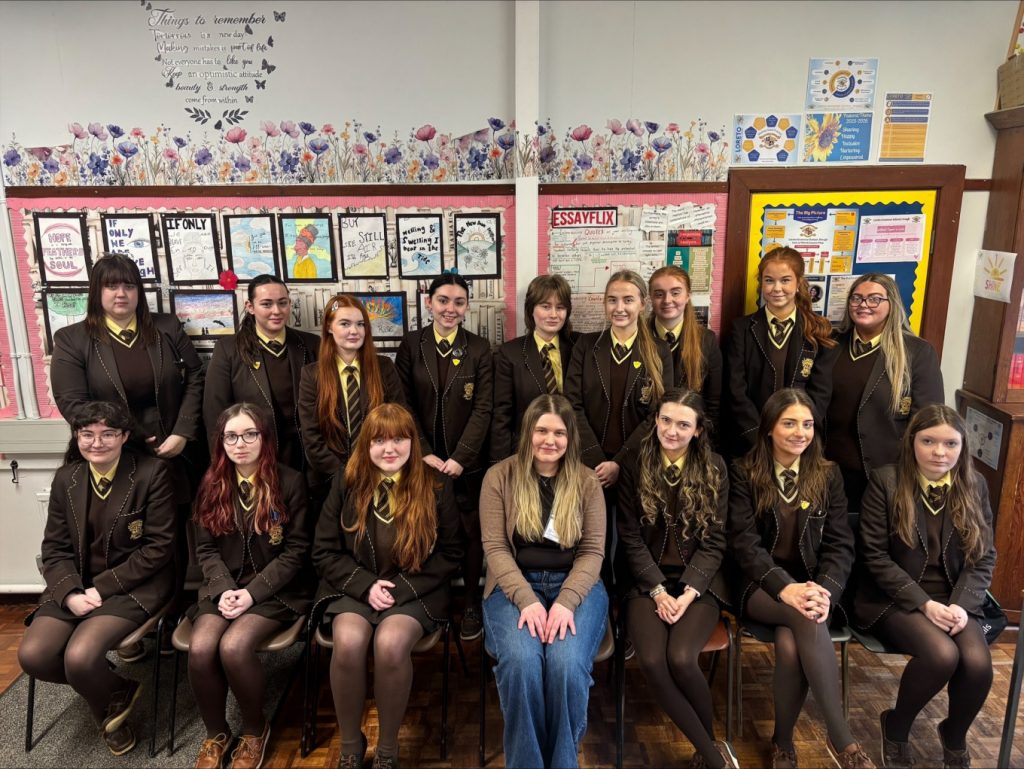
The English Department was delighted to welcome back former Loreto English Literature student Cassie McCaffrey, who returned to speak with our A2 class. Cassie offered thoughtful, down‑to‑earth advice as she reflected on her own journey through A2 study including balancing life, managing challenges, and strategically repeating modules. She also shared inspiring insights from her university experience studying Law with Politics at QUB. Thank you, Cassie, for your honesty, encouragement, and for reminding our students that there is no one ‘right’ path, only the one that works for you.